
Copyright : Re-publication of this article is authorised only in the following circumstances; the writer and Africa Legal are both recognised as the author and the website address www.africa-legal.com and original article link are back linked. Re-publication without both must be preauthorised by contacting editor@africa-legal.com
Resourcing Tomorrow: mining must evolve and overcome cultural barriers to succeed in a contradictory world
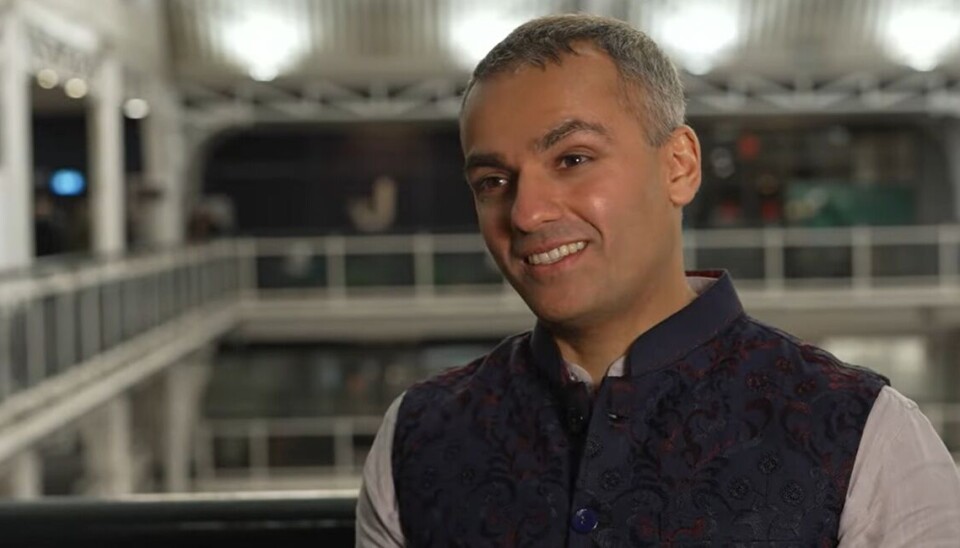
Resourcing Tomorrow, the global forum where mining leaders unite to shape the future of the industry, was held in London across 2-4 December. During his keynote address, ICMM CEO Rohitesh Dhawan challenged a risk-averse sector to confront global realities, and evolve
While headlines shout about critical minerals and many international bodies have energy transition top of mind, the mining sector “chronically underinvests” in research and development, compared to other industries, and its “well-intentioned but counterproductive” view of risk is shackling progress, said Rohitesh Dhawan, CEO of the International Council on Mining & Minerals (ICMM), this week.
“New equals risky, and in an industry rightly obsessed with safety, ‘risky’ is often a conversation-ender,” noted Dhawan in his keynote address at this week’s Resourcing Tomorrow global forum in London. “But the truth is: Innovation is not inherently unsafe. What is unsafe is refusing to evolve while pressures intensify around us.”
Leading the council of 24 CEOs of the world’s largest mining & metals companies in voluntary leadership actions that raise the standards of responsible mining, Dhawan is passionate about responsible mining, believing in the industry’s power to change lives and support nature, especially in the least developed parts of the world.
In his keynote on the first day of Resourcing Tomorrow, he highlighted how the mining industry is at the centre of a contradictory, at times paradoxical world.
“This decade may mint the first trillionaire while 800 million people still live in extreme poverty,” noted Dhawan. “Solar power costs have plummeted 90% – yet last year the world burned more fossil fuels than ever.”
With such focus on critical minerals and the energy transition, with more than 100 countries having released strategies, mining has never had so much global attention.
“Yet metal plants are closing,” said Dhawan. “Majors are restructuring. Outside of gold and copper, prices are weaker. New projects are stalling. The entire sector is valued at less than one-third of Nvidia. Something doesn’t add up. So what’s going on?”
Dhawan pointed to three paradoxes which were creating a disconnect: demand without supply (eg American copper); green ambition without affordable energy (eg European aluminium), and an urgent need for mining while the industry eschews innovation at the very time it should be a golden age of mining innovation.
Amongst the uncertainty and many pressures globally, mining must evolve.
“This is cultural work – deep, long-term, values-driven change,” said Dhawan on the first day of Resourcing Tomorrow. “And it needs to start now. That’s as much a call to action as a reminder to myself, as this may need an industry-wide intervention.”
“If we are serious about responsible and resilient mineral supply chains, we must go beyond the headlines and confront the real forces at play: the economics and geopolitics that make processing uncompetitive without support; the energy and carbon pricing systems that metals are highly sensitive to; and, the cultural barriers in mining that hold back innovation.”
Some of those potential innovations were on show at the Business Design Centre in London from Tuesday 2 to Thursday 4 December, as Resourcing Tomorrow brought together more than 2,000 key industry players, from mining and energy companies to investors, brokers, educators, government and regulators, suppliers and operators. This year’s event delved into the transformative challenges and opportunities defining the future of mining, from securing critical minerals and navigating global geopolitics to advancing sustainability and fostering collaboration.
Alongside country and regional pavilions that showcased key projects, innovations, and regional strengths, the global forum included Leadership Roundtables, a Women in Mining lounge for networking and collaboration, NextGen activities for students interested in careers in mining, Dragon’s Den-style pitch battles for mining projects and technologies, and a Government Roundtable at the London Stock Exchange (bringing together more than 40 nations for a unique and impactful discussion on the future of critical minerals and their role in shaping global policy frameworks), all culminating in last night’s Gala Dinner and Awards.
With many African nations holding significant reserves of critical minerals, the continent was a key part of many discussions at Resourcing Tomorrow this week.
At a stirring Leadership Roundtable on Nigeria’s new mining vision, chaired by Veronica Bolton Smith, the founder and CEO of the Critical Minerals Africa Group (CMAG), Nigeria’s Minister of Solid Minerals Oladele Alake said Africa must be a participant not a passenger in the global energy transition.
The Minister discussed the Africa Minerals Strategy Group, launched last year to help build “continental solidarity”, with a vision to harmonise policies, deepen intra-African beneficiation and ensure Africa speaks with one voice in the global mineral economy. He shared President Bola Tinubu’s administration’s ambition to make Nigeria “the hub of critical minerals processing and innovation in Africa”.
“We are expanding transport corridors to connect mining zones with ports and industrial parks,” said Minister Alake. “We are investing in green-energy corridors and refining capacity for lithium, nickel, cobalt and tin. We are developing research collaborations with global universities and technology firms to unlock new applications for our mineral endowment. Our vision is crystal clear: no mineral leaves Nigeria unprocessed. We are determined to add value where value is created – in Nigeria. That means establishing processing clusters, lapidary and jewellery centres and battery-grade mineral plants that generate employment and industrial capacity.”
Like Dhawan said in his keynote address, the mining industry is facing challenges and must evolve. Africa seems set to ensure the future doesn’t echo the past.